

Performance Supplements: Ultra-Useful?
Although whole foods and sport foods are the backbone for fueling exercise, the use of supplements is widespread amongst participants of all sports disciplines. These products often have claims of directly or indirectly improving athletic performance and small but worthwhile contributions can often make the difference in elite level competitions.
However, despite the purported performance-enhancing benefits of many supplements, very few are supported by robust scientific evidence. The UCI, world cycling’s governing body, recently commissioned a Sports Nutrition Project, comprising a series of research articles on various nutrition-related topics. One of these was on the use of sports foods and supplements to improve performance in cycling (Whitfield et al., 2025).
I was interested to explore whether their findings supported the use of particular supplements in ultra-distance cycling, either through facilitating beneficial adaptations via the training process or within events. This article will therefore look at the evidence that supports the use of particular performance-enhancing supplements, potential side-effects and their applicability to an ultra-distance context.
What is a supplement?
Defining what a supplement is isn’t a straightforward task. There is no single definition, either legal or within nutritional science, of what constitutes a dietary supplement. However in the International Olympic Committee's 2018 consensus statement on ‘dietary supplements and the high-performance athlete’ (Maughan et al., 2018) they propose that it is:
“A food, food component, nutrient, or non-food compound that is purposefully ingested in addition to the habitually consumed diet with the aim of achieving a specific health and/or performance benefit.”
There are evidently a range of motivations that can underpin supplement use, including for general health or correcting nutrient deficiencies. However, this article will focus solely on the potential performance-enhancing aspects, particularly in ultra-distance cycling.
Another important point to make here is that unlike food and drugs, dietary supplements containing micronutrients, probiotics, or ergogenic substances are not subject to state-regulated control. You will therefore want to have confidence in where you are sourcing your supplements from to ensure that what you are getting is what is stated on the label.
What evidence is there that supplements work?
Various groups have attempted to classify supplements according to their function, the strength of evidence for their use, and the risk of undesired outcomes. The most recognised schemes include the Sports Supplement Framework of the Australian Institute of Sport (AIS) and the aforementioned International Olympic Committee (IOC) consensus statement .
The AIS uses an ABCD Classification system to rank supplements into four groups according to scientific evidence and other practical considerations. Their guiding principles address the following questions:
Is it safe?
Is it permitted in sport?
Is there evidence that it “works”?
There are only six performance supplements classified as Group A (those with a sound evidence base) within this framework. These are: caffeine, creatine, beta-alanine, sodium bicarbonate, dietary nitrate, and glycerol.
The IOC is even more critical. Their wording is also instructive in stating that:
“A few performance-enhancing supplements might, at the present time, be considered to have an adequate level of support to suggest that marginal performance gains may be possible.”
The below diagram illustrates the hierarchy of evidence used to determine the efficacy of performance supplements by the IOC.
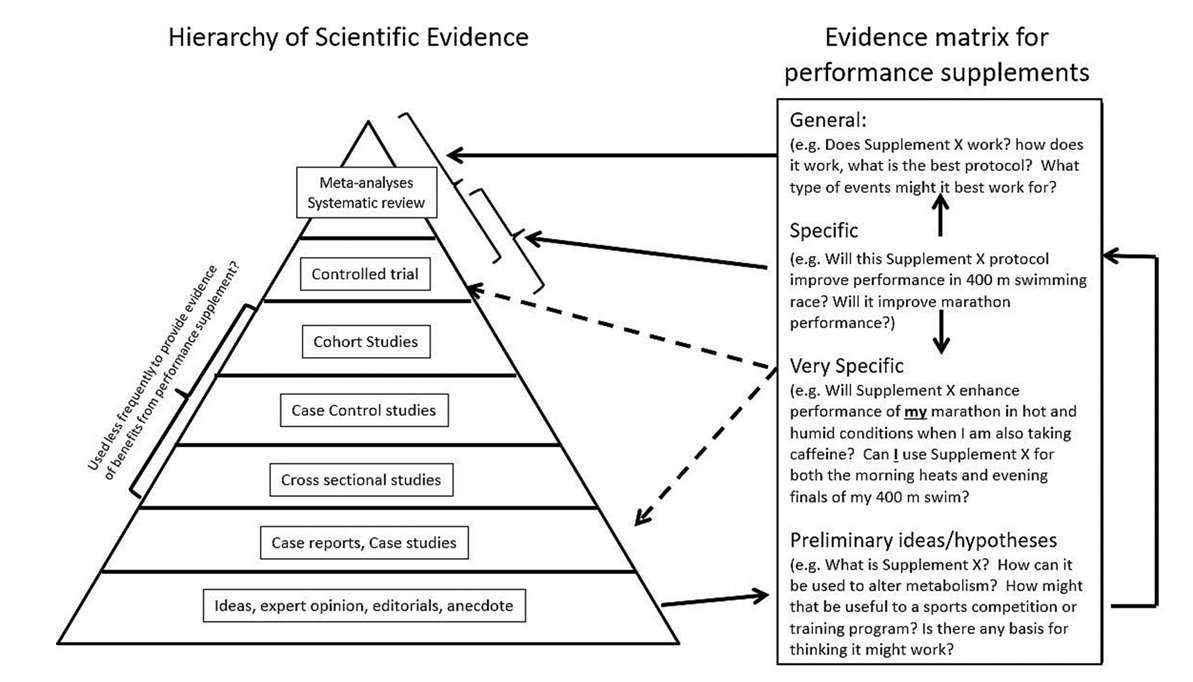
Maughan et al. (2018). Hierarchy of evidence used to establish good practice focused on the issue of nutritional supplements.
What are the potential performance benefits?
Although having a solid evidence base, the potential performance benefits of any of these supplements will depend on the specific demands of the event in question and a large element of individuality. The below table, adapted from the AIS Sports Supplement Framework, summarises the Group A performance supplements and the situations in which they may be beneficial.
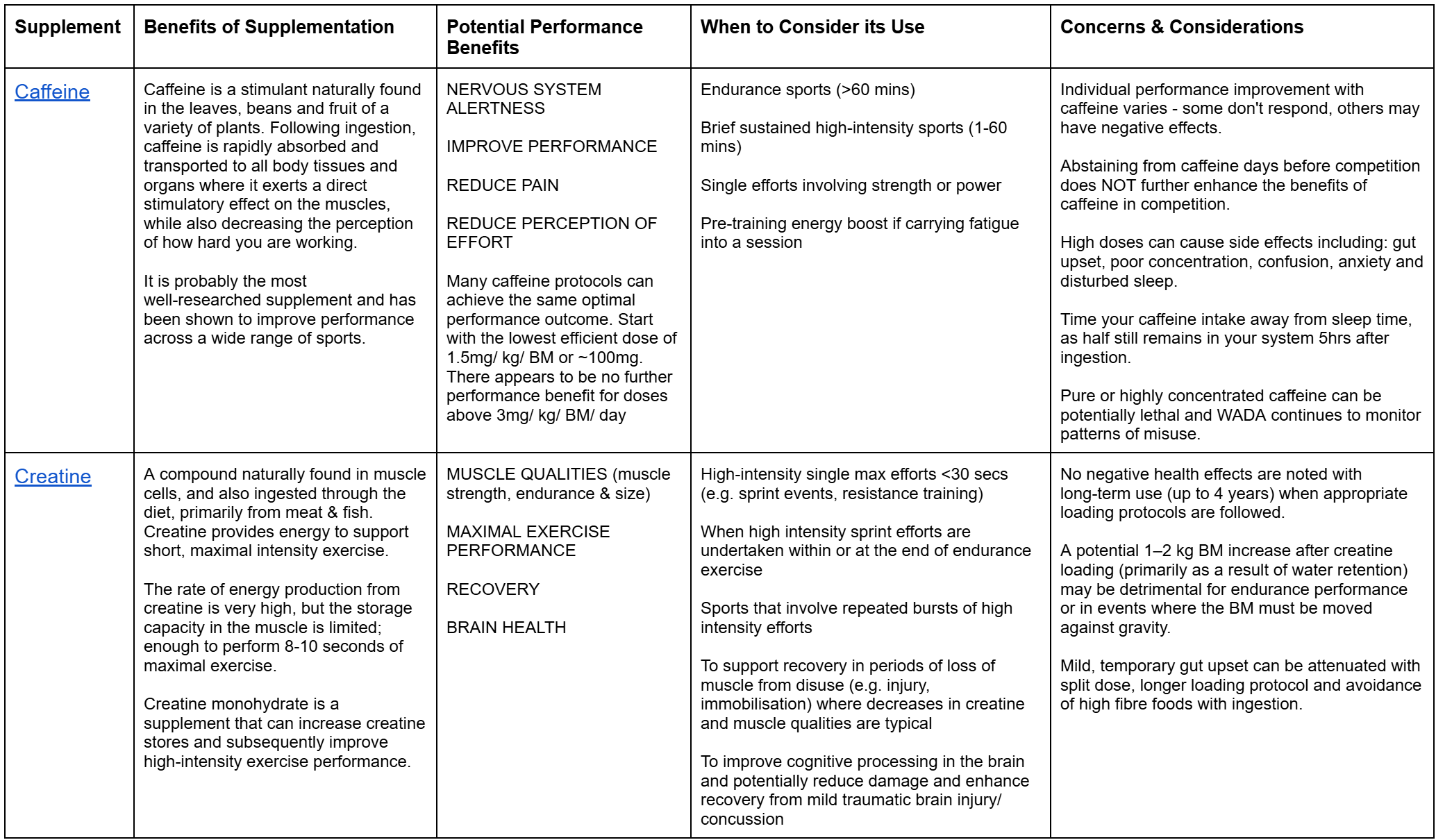
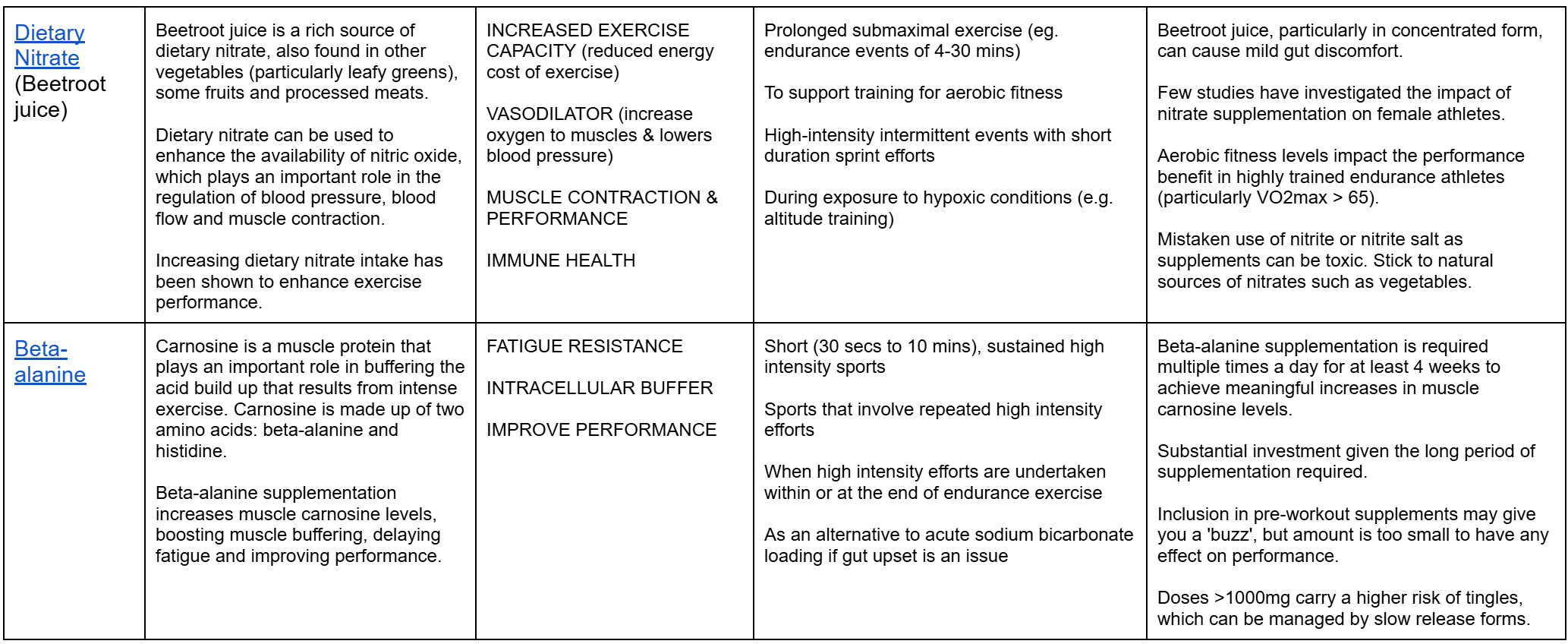
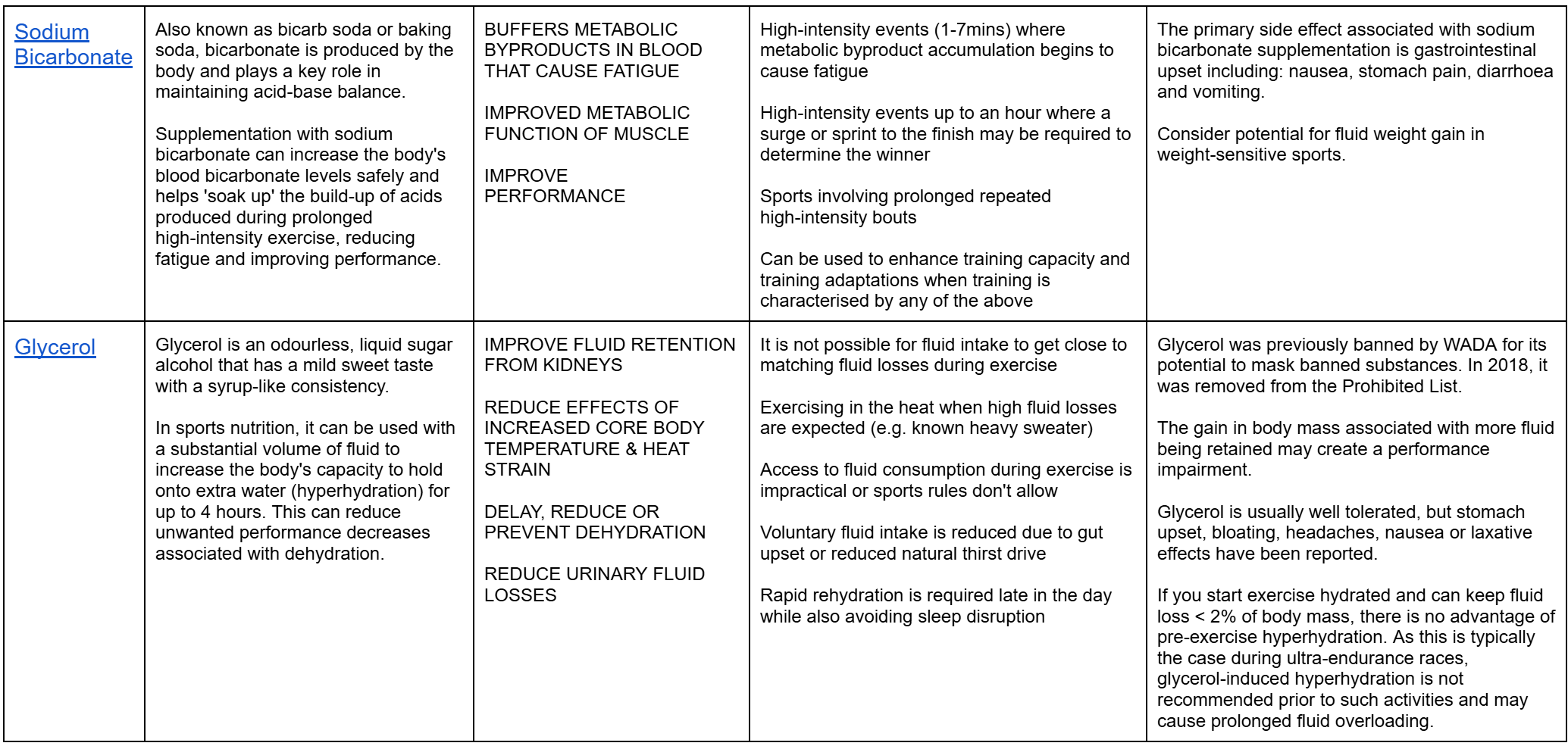
Group A Performance Supplements. Adapted from the AIS Sports Supplement Framework
If we are to consider the relevance of any of these supplements for ultra-distance athletes, my initial observation would be that the major performance enhancement effects associated with these Group A supplements are over short durations, and relatively marginal in terms of proven outcomes. Beta-alanine and sodium bicarbonate are almost exclusively beneficial for sprint-type efforts and glycerol is explicitly not recommended for ultra-distance events. None of these supplements therefore have direct links with extensive endurance performance.
Caffeine, taken in appropriate doses and times of day (so as not to disrupt sleep) can be used strategically in both training and events largely for its stimulatory effect and impact on perceived exertion. However, its use will not make up for inadequate sleep and should be seen as a compliment to appropriate nutrition intake.
Creatine has no strong evidence supporting its impact on endurance exercise, but has some potential for use in training for an ultra-distance athlete. This is likely to be most relevant during periods of concentrated strength work and possibly for recovery from high-intensity sessions.
Similarly with dietary nitrogen, there is evidence for its performance enhancing effects for durations of <40 minutes, so its greatest benefit for an ultra-distance athlete is likely to be through its potential to support a greater training load. Whether the benefits of increased energy capacity carry through to extended durations is not clear and, again, anything above marginal benefits should not be counted on.
Maybe the greatest potential performance effect of any of these supplements is that of the placebo. That is to say, a favourable outcome arising simply from an individual’s belief that they have received a beneficial treatment or experience.
A meta-analysis of the placebo effect and sports performance by Hurst et al. (2019) notes that supplements have often been used as the study theme, with studies being likely to report a performance benefit in response to a placebo treatment when it is purported to be caffeine. An example of this is through a study by Beedie et al. (2006) where subjects performed a 10km cycling time after consuming no caffeine, but having been told they had consumed varying amounts. A direct relationship was observed between performance and quantity of believed caffeine intake. Mean power outputs were reduced by 1.3% compared to baseline testing in a trial where subjects believed they had received a placebo treatment. However, when they believed they had consumed 4.5 g/kg and 9.0 g/kg doses of caffeine, mean power increased by 1.3 and 3.1% respectively.
What are the potential side-effects or undesired consequences?
As demonstrated in the above table, despite being classified as safe to use, even evidence-based products may cause side effects for some individuals such as gastrointestinal discomfort, difficulty sleeping or excess water retention which can impact performance and recovery. The risks are even greater in supplements that do not have the same level of evidence and thus not supported by credible science.
For me though, my major concern would be if supplements are seen as a short cut to performance, based on the advice of bro science, at the expense of evidence-based practices such as sound nutrition, adequate sleep, mental preparation, and fundamental physical training.
The UCI study put this neatly in commenting that:
“Performance benefit is likely to be worthwhile in high-performance cycling, where margins of success are small and hard to detect using conventional research designs. However, non-elite cyclists should undertake a different cost:benefit analysis, which prioritises factors that may make a more pronounced performance improvement (such as training and equipment) rather than relying on performance supplements alone.”
The AIS provides a decision tree for the use of supplements promoting a direct or indirect performance improvement, guiding you through all the deliberations you should be making before even trialling a supplement for potential performance benefits. I would recommend following this approach for any performance-related supplements you may be considering.
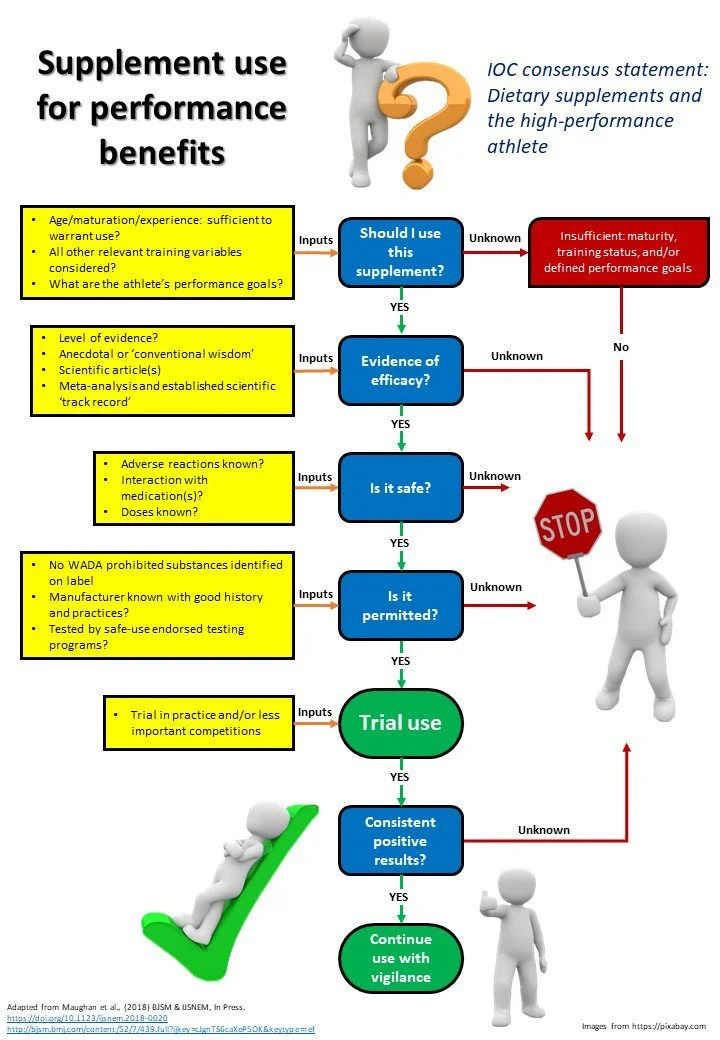
Decision tree for the use of supplements promoting a direct or indirect performance improvement. (AIS Sports Supplement Framework Position Statement)
Food First?
There is a link here with the ‘food first’ concept concerning sports nutrition as a whole that I very much approve of. Schek (2025) conducted a review of the use of supplements in competitive sport with the title “Food First', Not 'Food Only”. ‘Food first‘ means that athletes should prioritise a balanced diet as the foundation of their nutritional strategy and use supplements to complement rather than replace whole foods.
Depending on an individual’s training load, competition schedule, or health situation, a ‘food only‘ strategy may not be an adequate means to provide the energy and nutrients needed to win a competition. Nevertheless, Schek’s conclusion was that:
“Where practically possible, nutrient provision should come from whole foods and drinks rather than from isolated food components or dietary supplements … Dietary supplements are not a substitute for performance-oriented nutrition. ‘Food over supplement‘ must always be the basic principle in applied sports nutrition, and athletes need to be educated accordingly.”
The AIS carry these ‘food first' principles to their advice on dietary supplements, highlighting where the benefits can be gained through natural, whole food sources and whether these are adequate to provide the performance enhancing benefits. Their illustration of supplement use within broader health and performance nutrition strategies is a helpful reminder of the competing and often conflicting interests of the supplement industry (valued at $9.53bn in 2024) and established scientific evidence.
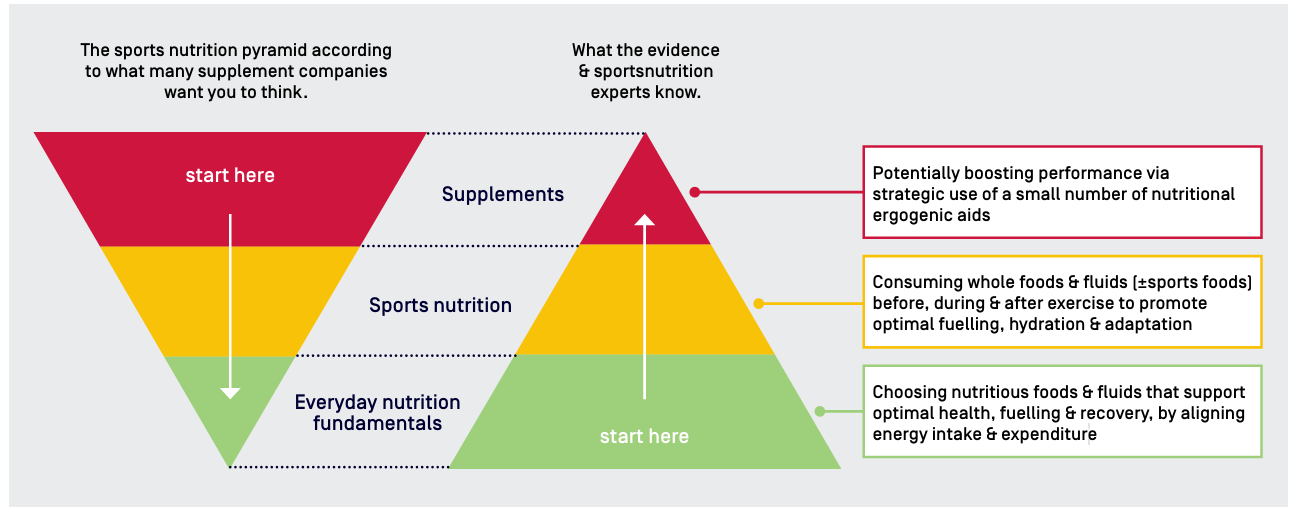
AIS Sports Supplement Framework Position Statement: Relevance of supplement use within broader health and performance nutrition strategies:
Conclusion
A small number of dietary supplements have credible evidence supporting their ability to directly enhance competition performance in specific circumstances. However, even these are only likely to, in the words of the IOC consensus statement “play a small role in an athlete’s sports nutrition plan”. The evidence for their applicability in ultra-distance contexts is even more sparse, and any potential benefits are likely to be marginal at best. According to individual circumstances, there will be a cost:benefit analysis to be made for the use of any supplement by each athlete and the decision making process should take in to the potential risks or unintended consequences.
Each of the sources cited herein also express caution and recommend consulting expert advice before resorting to over-the-counter supplements. Supplements should never be seen as a short cut to performance over basic training principles and good nutrition practices. Always question who you are getting your information from too - the highest prevalence of the use of supplements isn’t elite athletes, it is actually amateur masters aged athletes.
References
AIS Sports Supplement Framework: https://www.ausport.gov.au/ais/nutrition/supplements
Beedie CJ, Stuart EM, Coleman DA & Foad AJ. (2006). Placebo effects of caffeine on cycling performance. Medicine & Science in Sports & Exercise 38, 2159-2164.
Hurst P, Foad A, Coleman D & Beedie C. (2017). Athletes Intending to Use Sports Supplements Are More Likely to Respond to a Placebo. Medicine and Science in Sports and Exercise 49, 1877-1883.
Maughan RJ, Burke LM, Dvorak J, Larson-Meyer DE, Peeling P, Phillips SM, Rawson ES, Walsh NP, Garthe I, Geyer H, Meeusen R, van Loon LJC, Shirreffs SM, Spriet LL, Stuart M, Vernec A, Currell K, Ali VM, Budgett RG, Ljungqvist A, Mountjoy M, Pitsiladis YP, Soligard T, Erdener U, Engebretsen L. IOC consensus statement: dietary supplements and the high-performance athlete. Br J Sports Med. 2018 Apr;52(7):439-455. doi: 10.1136/bjsports-2018-099027. Epub 2018 Mar 14. PMID: 29540367; PMCID: PMC5867441.
Schek, Alexandra. (2025). 'Food First', Not 'Food Only' in Competitive Sports: A Mini-Review. The Open Sports Sciences Journal. 18. 10.2174/011875399X378498250508065801.
Whitfield J, Egan B, Del Coso J, Derave W, Saunders B, Burke LM. UCI Sports Nutrition Project: Considerations and Applications for the Use of Sports Foods and Supplements to Improve Performance in Cycling. Int J Sport Nutr Exerc Metab. 2025 Dec 31:1-28. doi: 10.1123/ijsnem.2025-0111. Epub ahead of print. PMID: 41570809.